Noche Potosi

Noche Potosi
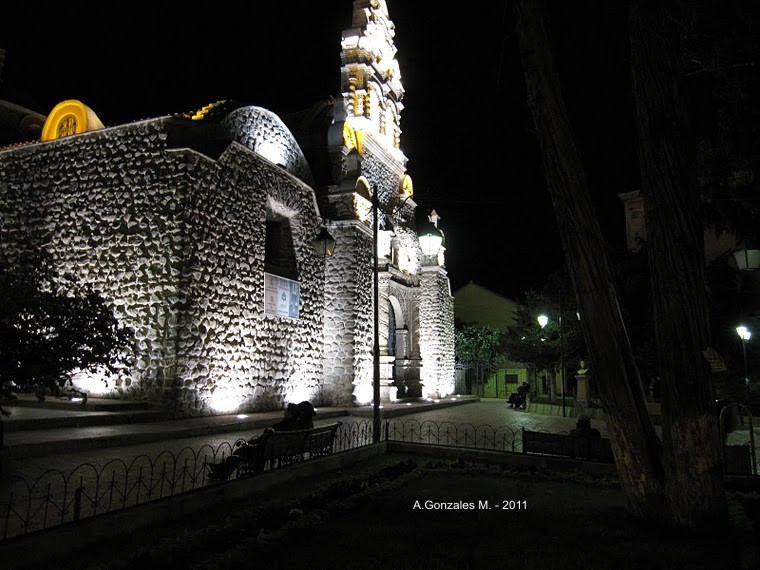
Iglesia San Bernardo

sábado, 20 de abril de 2019

2019 year


Prof. P.K.Samee:

Why is important remark the importance of his works?

Because there are almost everyting  for every engineering problems principally for Fluid Mechanics (mathematical and phisics analisys too)

There are a lot of very important and invaluable works of Prof. P.K. Swamme, I was tinking publish all the abstracts of  his technical works, but it is to big for this Blog, then you can find at the address bellow.

Google Scholar citations of     P.K. Swamee
There are a two books ( the another is “Design of Channels”, see reference in this blog)

 https://onlinelibrary.wiley.com/doi/book/10.1002/9780470225059


Prabhata K Swamee, Ashok K Sharma
Publication date :   2008/1/9
Publisher  :  John Wiley & Sons
Description
This authoritative resource consolidates comprehensive information on the analysis and design of water supply systems into one practical, hands-on reference. After an introduction and explanation of the basic principles of pipe flows, it covers topics ranging from cost considerations to optimal water distribution design to various types of systems to writing water distribution programs. With numerous examples and closed-form design equations, this is the definitive reference for civil and environmental engineers, water supply managers and planners, and postgraduate students.
Total citations Cited by 161 Related articles All 5 versions  Scholar articles


View Table of Contents for Design of Water Supply Pipe Networks


The equation that helped to enginners around the world  (included in WaterCAD and other software):    Big Work !!!
Authors   :  PK Swanee, Akalank K Jain
Publication date :   1976/5
Journal of the hydraulics division
Volume  102 ,  Issue  5
Description
Direct solutions of pipe flow problems are not possible because of the implicit form of Colebrook-White equation which expresses the hydraulic resistance of commercial pipes. The three basic and major problems encountered in hydraulic engineering practice are the determination of pipe diameter, the discharge and the head loss. The solution of these problems on the conventional lines involves many trials and tedious computations. Some research workers have proposed graphical solutions which have their own inherent limitations. Reported herein are explicit and accurate equations for pipe diameter and head loss and a closed form solution for the discharge through the pipe, based on Colebrook-White equation. These explicit equations can also be utilized with advantage in optimization studies of pipelines and water distribution systems.
Total citations  : Cited by 651  Related articles All 3 versions Scholar articles
PK Swanee, AK Jain - Journal of the Hydraulics Division, 1976 ASCE

EXPLICIT EQUATIONS FOR PIPEFLOW PROBLEMS

Direct solutions of pipe flow problems are not possible because of the implicit form of Colebrook-White equation which expresses the hydraulic resistance of commercial pipes. The three basic and major problems encountered in hydraulic engineering practice are the determination of pipe diameter, the discharge and the head loss. The solution of these problems on the conventional lines involves many trials and tedious computations. Some research workers have proposed graphical solutions which have their own inherent limitations. Reported herein are explicit and accurate equations for pipe diameter and head loss and a closed form solution for the discharge through the pipe, based on Colebrook-White equation. These explicit equations can also be utilized with advantage in optimization studies of pipelines and water distribution systems.
Corporate Authors:   American Society of Civil Engineers  ASCE , USA

martes, 11 de agosto de 2015

New extraordinary book of Prof. Dr. Prabhata K. Swamee ( Dr. B.R. Chahar, coautor )


  Prof. Dr. Prabhata K. Swamee´s  book 2015 : extraordinary, nice, modern, new and more...


 It is the cover of a very wonderful book, new, published recently : 2015. Editorial Springer (C)

The autors has wrote at

"Preface.

"Huge amounts of money are invested around the world in construction or up gradation
"of canals. Nearly 80–85 % of the cost of a total canal system constitutes
"transmission and the distribution canal networks. Due to the enormous costs
"involved, canal design is an area that has attracted many researchers for a long time.
"The aim of this book is to provide the reader with an understanding of the analysis
"and design aspects of canals. The book covers the topics related to the analysis
"and design of water-carrying as well as sediment-transporting canals. It covers the
"uniform flow principles and their application in the determination of normal depth... "


Prof. Dr. Swamme´s new book include new perspectives for Design of Canals using  Mathematics, Operation Research, Fluid Mechanics, modern graphical tools...

The special focus on Cost, not only hydraulics basis for get a optimal design.

As, Prof. Dr. Swamee and Dr. Chahar has wrote (page 2  - Introduction)

"1.2 Objective Function

" The optimal design of a canal consists of minimization of an objective function
"which is subjected to certain constraints. The known parameters are flow discharge,
"longitudinal bed slope of canal, and the canal surface roughness. There are various
"objective functions such as flow area, earthwork cost, lining cost, seepage loss,
"evaporation loss, and their combinations (Swamee et al. 2000a, b, c, 2001a, b,
"2002a, b; Chahar 2000; Basu 2013). Apart from costs, reliability is another
"important objective of the canal design. However, there has been no attempt in this
"direction.
"As artificial channels have objective function, natural channels also have objectives.
"A natural channel is a stream in equilibrium, which is neither silting nor
"scouring over a period of time. Obviously, such a stream has developed a crosssectional
"area of flow through natural processes of deposition and scour. Using
"Lacey’s equations for stable channel geometry, and using geometric programming,
"Swamee (2000) synthesized an objective function for stable alluvial channels. On
"the other hand, in a similar manner, Swamee et al. (2008) found an objective
"function for river Brahmaputra. Chapter 2 formulates objective functions."

Circular section was included, too.

Chapter 11, also include :  "Terrain representation by Fourier Series"
 Graphical representations:


 Appendix 1,  has a review of:   Lambert´s W Function.  Appendix 2: Conformal Mapping; Schwarz-Christoffel Transformation; Schwarz-Christoffel Transformation of Semi-infinite Strip; Appendix 3: Solution of Cubic Equation.

Contents:

1 Introduction
1.1 General.
1.2 Objective Function
1.3 Uniform Flow
1.4 General Principles
1.5 Minimum Area Section
1.6 Minimum Cost Canal Section .
1.7 MinimumWater Loss Section
1.8 Minimum Overall Cost Section
1.9 Canal Transitions
1.10 Transmission Canal
1.11 Canal Route Alignment
1.12 Mathematical Terms.
1.13 Scope of the Book
References.
2 Objective Functions
2.1 Flow Area.
2.2 Lining Cost .
2.3 Earthwork Cost
2.4 AnnualWater Loss Cost .
2.4.1 Seepage Loss.
2.4.2 Evaporation Loss .
2.4.3 Annual Cost of Total Water Loss .
2.5 Unification of Costs .
2.5.1 CapitalizationMethod .
2.5.2 AnnuityMethod .
2.5.3 Cost Function .
2.6 Stable Channel Objective Function. .
References.
3 Basic Canal Hydraulics .
3.1 Resistance Equations .
3.1.1 Viscous Flow in Channels .
3.1.2 Turbulent Flow in Channels .
3.1.3 Sediment-Transporting Canals . .
3.2 Normal Depth .
3.2.1 Viscous Flow in Rectangular Channel .
3.2.2 Turbulent Flow Channels.
3.2.3 Natural Channels .
3.3 Canal Operations .
3.3.1 Normal Sluice Gate.
3.3.2 Side Sluice Gate .
3.3.3 SideWeir .
3.4 Canal DischargeMeasurements .
3.4.1 RectangularWeir .
3.4.2 LinearWeir .
3.5 Critical Flow.
3.5.1 Critical Depth ..
3.5.2 Critical Slope and Limit Slope .
References.
4 General Principles of Canal Design .
4.1 Constraints .
4.1.1 Safety Constraints .
4.1.2 System Constraint .
4.2 Formulation of the Problem.
4.3 Essential Parameters for Canal Design .
4.3.1 Canal Discharge .
4.3.2 Canal Lining andMaterial Selection .
4.3.3 Canal Banks and Freeboard
4.3.4 Longitudinal Slope of Canal .
4.3.5 Canal Section Shape .
4.3.6 Canal Layout .
References.
5 Design for Minimum Flow Area .
5.1 Turbulent Flow Canals .
5.2 Viscous Flow Channels .
5.3 Sediment-Transporting Channels .
References.
6 Minimum Cost Canal Section .
6.1 Construction Cost Minimization .
6.1.2 Minimum Earthwork Cost Section .
6.2 Generalized Equations of Wider Applicability .
References.
7 Minimum Water Loss Canal Section .
7.1 Minimum Seepage Loss Canal Sections .
7.1.1 Channels Having Drainage Layer at Large Depth .
7.1.2 Channels Having Drainage Layer at Shallow Depth.
7.2 Inclusion of Evaporation Loss .
References.
8 Overall Minimum Cost Canal Sections .
8.1 Analytical Considerations.
8.2 Particular Cases .
8.2.1 Minimum Cost Lined Sections.
8.2.2 Minimum Water Loss Sections .
8.3 Design Steps .
Reference .

9.1 Expansion Transitions.
9.1.1 Numerical Algorithm..
9.2 Contraction Transitions .
References..
10 Optimal Design of Transmission Canal .
10.1 Analytical Considerations.
11 Salient Features of Canal Route Alignment .
11.1 Unit Length Costs .
11.1.1 Earthwork Cost .
11.1.2 Unit Length Canal Section Cost .
11.2 Balancing Depth Considerations .
11.3 Balancing Length Considerations .
11.4 Canal Alignment: Costs .
11.5 Terrain Representation by Fourier Series .
11.5.1 Canal Alignment Algorithm .
References.
Appendices .
Appendix 1: Lambert’s W Function
Solutions of Equations .
Selection of Branch of W Function.
Asymptotic Limits .
Reference .
Appendix 2: Conformal Mapping .
Mapping .
Conformal Mapping.
Inverse Mapping Functions .
Velocity Hodograph .
Schwarz  -Christoffel Transformation .
Mapping Example for Seepage from a Canal .
References.

One Real Root Case .
Three Real Roots Case .
Index .


Dr. P.K. Swamee is a distinguished Emeritus Professor of Civil Engineering at
ITM University, Gurgaon, Haryana, India. He was formerly a Professor of Civil
Engineering at the University of Roorkee (now the Indian Institute of Technology
Roorkee), India. He has over fifty years of teaching, research, and industry
experience in water resources engineering and has published numerous articles in
international journals. Dr. Swamee is a Fellow of the Indian National Academy of
Engineering


The book has a lot of absolute new concepts, of course will be the main reference for DESIGN OF CANALS, and it will be a CLASSIC.

Thanks you Dr. Swamee for let me  know your work and extend it for Bolivia and South America.

Alberto Gonzales Murillo, august 11, 2015  , Potosi , Bolivia

Editor web site:   http://www.springer.com/us/book/9788132223214


jueves, 24 de abril de 2014

Dr. Prabhata K. Swamee, eminent scientist


 Design of water Supply Pipe Networks” John Wiley and Sons Inc., NJ, USA. (2013)

 by  P.K. Swamee - A. Sharma


Dr. Bhagu R. Chahar, Professor

Dr. Bhagu R. Chahar, Professor,  Thank you very much for twelve paper that you wrote and sent me.

Dr. Bhagu R. Chahar , Professor

Department of Civil Engineering
Hauz Khas, New Delhi – 110 016 (INDIA)


AWARDS :
  • Visiting International Fellowship 2013, EWRI of ASCE
  • AICTE Career Award for Young Teacher – 2001.
  • DST - SERC Young Scientist award – 2003
  • Vice President, NIC, EWRI, ASCE

MEMBERSHIPS :
  1. Fellow of the Indian Society for Hydraulics (F 96/212).
  2. Fellow of the Indian Water Works Association (LF 1102).
  3. Fellow of the Indian Water Resources Society (LM 96-4832).
  4. Life Member of the Indian Society for Technical Education (LM 23010).
  5. Life Member of the Indian Association of Hydrologists (LM 1029).
  6. Life Member of the Institution of Engineers (India) (M/124219/3).
 REVIEWER FOR JOURNALS :
  1. Water Resources Research American Geophysical Union Journal
  2. ASCE Journal of Hydrologic Engineering.
  3. ASCE Journal of Irrigation and Drainage Engineering.
  4. Groundwater (NGWA Journal)
  5. Elsevier Journal of Hydrology.
  6. Water Management – Proceedings of the ICE, Thomas Telford
  7. Elsevier Journal of Resources, Conservation and Recycling.
  8. Iranian Journal of Science and Technology.
  9. ISH Journal  of Hydraulic Engineering (Indian Journal)
  10. Journal of  Indian Water Resources Society.
  11. Institution of Engineers (I) Journal.
    1.   Visiting Professor, SITE, Ecole nationale supérieure des Mines de Saint-Etienne, France from June 15, 2009 to July 31, 2009.
  1. IIT Kharagpur offered post of Assistant Professor in Civil Engineering in November 2003.
  2. IIT Roorkee offered post of Assistant Professor in Civil Engineering in February 2004.
  3. Expert member STA Committee for scrutinizing projects for Rural Roads under PMGSY for Rajasthan State
  4. Member Hydrology Committee for Award, Monitoring and Review Hydrological Studies of Ken-Betwa Link, NWDA, Ministry of Water Resources.
EXPERIENCE :

  • December 2012 to Date    Professor, Dept of Civil Engineering, Indian Institute of Technology, Delhi
  • Aug 2008 to Dec 2012    Associate Professor, Dept of Civil Engineering, Indian Institute of Technology, Delhi
  • Sept 2004 to Aug 2008    Assistant Professor, Dept of Civil Engineering, Indian Institute of Technology, Delhi.
  • Dec 2003 to Aug 2004    Visiting Faculty, Dept of Civil Engineering, Indian Institute of Technology, Delhi.
  • Feb 1992 to Dec. 2003    Asst Professor in Civil Engg, MBM Engineering College, JNV University Jodhpur.
RESERARCH  GUIDANCE : Nine (9) PhD level; 24 M.Tech. level; 27 B.Tech. level.

Indian Institute of Technology one of the 100 best world Univertities.

Visit WEB site :          http://web.iitd.ac.in

Dr. Chahar,  your work help me for teaching at University Tomas Frias, Potosi, Bolivia 

Dr. ASHOK SHARMA : WELCOME TO BOLIVIA

 Dr.  Ashok Sharma:  


Thanks you very much for send me journal´s pappers that you wrote

Dr.  Ashok Sharma:  Professional Engineer with 30 years of research, teaching and industry experience in planning, design, and management of water supply, waste water and storm water systems, and in sustainability assessment, environmental planning, water quality, and river pollution abatement. Ashok is a Principal Research Engineer with CSIRO Land and Water, Australia and is also Adjunct Professor at Victoria University, Melbourne Australia. He holds a PhD in Civil Engineering and a Fellow of Institution of Engineers Australia and is also a Chartered Professional Engineer. 

 Internacional awared works :   2010 World Water Congress at MONTREAL , CANADA
  1. IWA Sustainability Award 2010 (runner-up) for research excellence in sustainable urban water management at  World Water Congress 2010 Montreal for paper on Sustainable Sewerage Servicing Options for Peri-urban Areas with Failing Septic Systems, -  Sharma A., Tjandraatmadja, G., Grant, A., Grant T. and  Pamminger, F. (2010) “Sustainable Sewerage Servicing Options for Peri-urban Areas with Failing Septic Systems” Water Science and Technology, IWA, London , 62(3), 570-585
  2008  World Water Congress at VIENNA
  1. IWA Sustainability Award 2008 (runner-up) for research excellence in sustainable urban water management at  World Water Congress 2008 Vienna for paper on Environmental and economic assessment  of urban water services for a Greenfield development                               Sharma, A., Grant, A., Grant T., Pamminger, F. and Opray L. (2009) “Environmental and economic assessment  of urban water services for a Greenfield development” Environmental Engineering Science, 26(5): 921-934
Dr. Sharma has many other works published, and the The extraordinary book  (co autor with the ilustre 
Dr. PRABHATA  K. SWAMEE )
 
   Swamee P.K. and Sharma A.K. (2008). “Design of water Supply Pipe NetworksJohn Wiley and Sons Inc., NJ, USA.     The extraordinary book  (co autor with the ilustre Dr. PRABHATA  K. SWAMEE )
Dr Sharma is now at:


You  improved my teaching work at University Tomas Frias, Potosí, Bolivia